
Stories from the campfire
If You're Scaling on Social, It's Time to Add TV
Ben Zimmerman, Co-Founder, Bronco TVLast updated
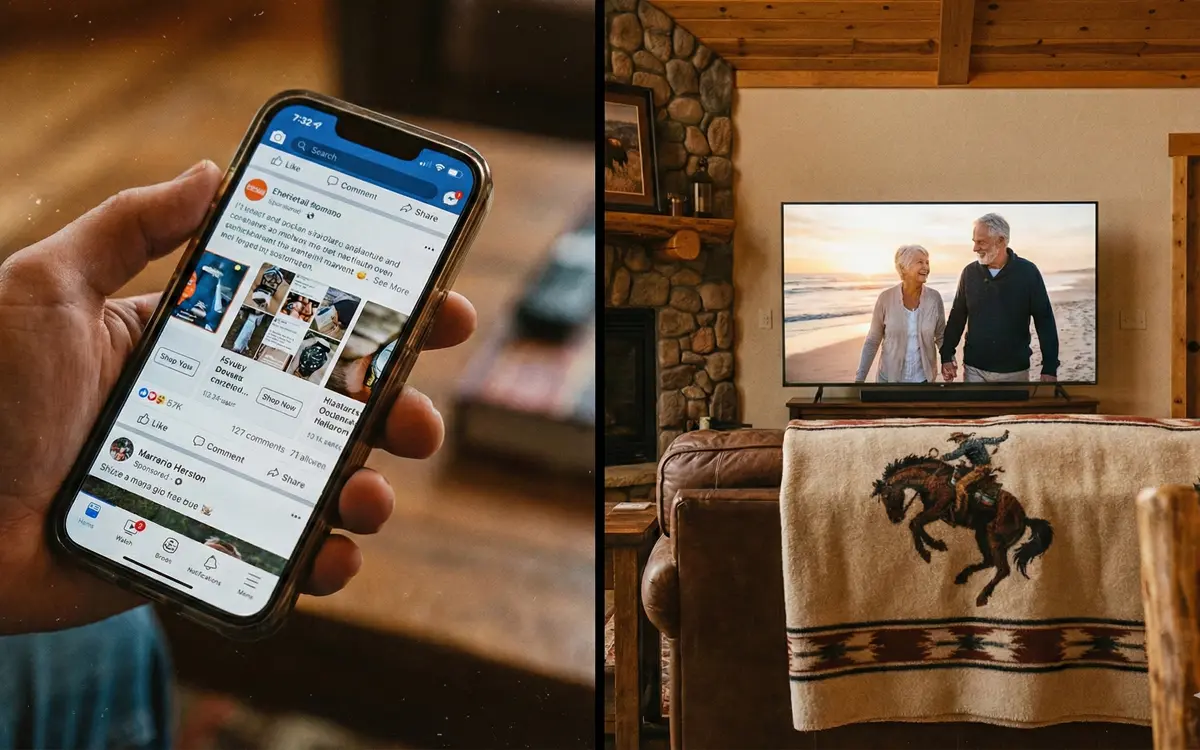
If you’re scaling on social, connected TV (CTV) is the next channel to add: comparable costs, a bigger screen and a viewer who isn’t scrolling past.
For years, TV sat in a different category. It required bigger budgets, longer planning cycles, and typically belonged to more established brands. Social was where growth happened. TV was where brand dollars went.
That distinction doesn’t hold anymore.
Is CTV still more expensive than social?
CTV costs are often closer to paid social than most brands expect. The long-standing belief that TV is inherently more expensive simple isn’t accurate. If you’re already operating at scale on Meta, the barrier to adding CTV isn’t financial. It’s strategic.
Why does growth on social eventually slow down?
Most growth brands build inside one walled garden. It makes sense. Social platforms are fast, measurable, and self-serve. You get immediate feedback loops, clear reporting, and tight optimization cycles. But it’s still a closed ecosystem.
- Sound is off by default
- Ads are skippable
- Feeds are crowded
- Exposure is short-form and scroll-based
- Performance is reported in the same environment where the inventory is sold
It works, until it doesn’t.
As budgets grow, auctions tighten. Creative fatigue accelerates. Marginal efficiency declines. At a certain point, continuing to push spend into the same feed produces diminishing returns. That’s usually the moment brands begin looking for incremental growth without doubling down on the same environment.
Connected TV offers that expansion.
What makes CTV different?
CTV today isn’t legacy linear buying. It’s programmatic, audience-targeted, and performance measurable. Campaigns can launch in minutes. Creative can be tested. Optimization loops exist. The buying mechanics are not foreign to digital teams. What’s different is the environment.
CTV runs on the television in the living room.
- It’s full screen
- Sound is on
- Ads are non-skippable
- The surrounding content is episodic and intentionally selected
- Viewers are leaning in, not scrolling past
The economics are now comparable to social, but the viewing experience is fundamentally different.
Does adding TV mean pulling back on social?
This isn’t about replacing Meta. It’s about reducing concentration risk and expanding surface area. When CPMs are aligned, the question shifts from “Can we afford TV?” to “Why are we limiting ourselves to one ecosystem?”
Diversification today isn’t a brand play. It’s a growth strategy.
The brands that unlock their next stage of scale won’t abandon social. They’ll complement it. Same performance discipline. Same measurement expectations. Different screen. Different physics.
CTV is no longer a premium channel reserved for enterprise budgets. It’s accessible, measurable, and increasingly necessary for brands that want to grow beyond a single walled garden.
How Bronco TV helps
Bronco TV is built for brands making that move. Turn the social videos you already have into TV-ready ads, even straight from your best-performing public Instagram post. Connect Shopify, Klaviyo, GA4 and Triple Whale to see TV next to every other channel you run. And every campaign has incrementality testing built in, so you can see what TV actually caused, not just what it took credit for.
If you’re scaling on social, adding TV isn’t a leap. It’s the next logical step.
Keep reading: